
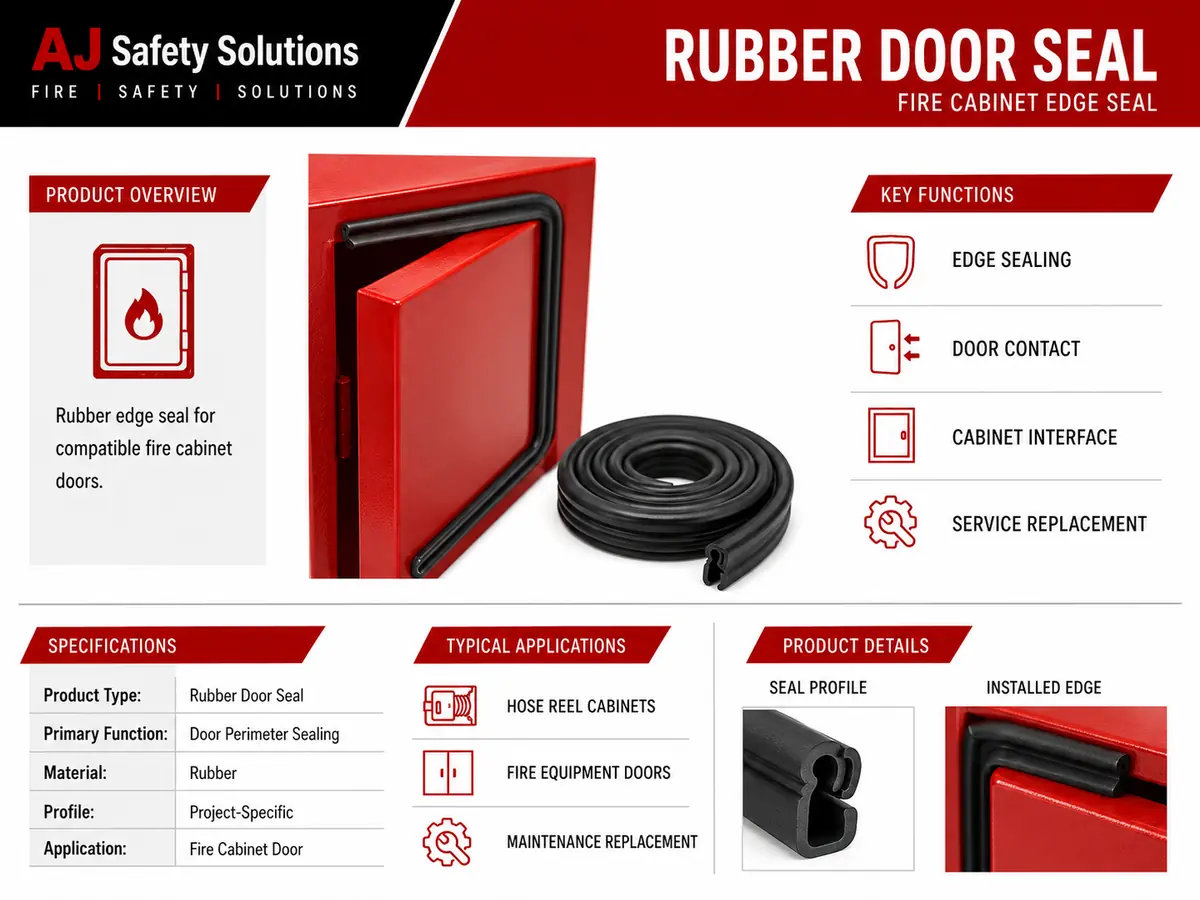
Rubber Door Seal for Fire Cabinet Door Edges
A Rubber Door Seal provides a flexible contact interface between a compatible fire cabinet door and its surrounding frame. The seal can help maintain consistent door contact and reduce direct metal-to-metal interaction, but weatherproofing, smoke control, water resistance and environmental performance must not be assumed without verified product data and cabinet testing.
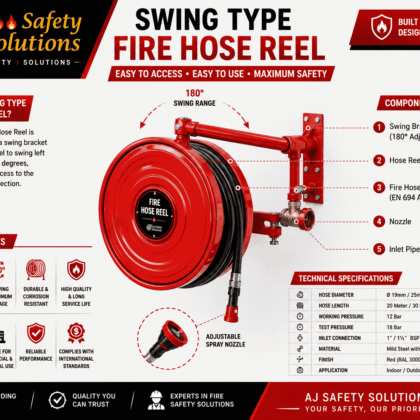
Coordinate the accessory through AJ Safety Solutions, review the complete hose reel accessories category, and compare the related fire cabinet category before finalising the assembly.
Flexible Door Perimeter Interface
The seal follows the door or frame perimeter using a project-specific profile and retention method. Correct fit allows the door to close without excessive force, gaps, rolling or local compression. Corners, joints and termination points should be prepared according to the supplied installation method so they do not interfere with hinges or the lock.
Key Product Considerations
- Rubber material provides the flexible sealing element named in this record.
- Perimeter contact supports a consistent door-to-frame interface.
- Visible seal edges allow inspection for displacement and surface damage.
- Project-specific profile permits matching with the actual cabinet geometry.
Typical Applications
Rubber door seals may be used on hose reel cabinets, fire equipment doors, replacement panels and other compatible enclosures. Suitability for indoor, outdoor, wet, dusty, hot or chemically exposed locations should be confirmed from the exact seal and cabinet documentation.
Specification and Ordering Notes
Verify profile shape, cross-section, supplied length, rubber type and grade, hardness, colour, retention method, adhesive if used, corner treatment, temperature and environmental limits, fire behaviour, approval and included consumables. No dimension, rubber grade, weatherproof rating, fire rating, certification or included adhesive is claimed.
Inspection and Standards Context
Inspect for cracking, hardening, tearing, flattening, shrinkage, detachment, gaps and interference with door operation. Clean or replace the seal only in accordance with the approved cabinet and seal instructions. Project teams may consult NFPA 14 for relevant standpipe and hose system requirements and NFPA 25 for inspection, testing and maintenance guidance. Adopted codes, approved drawings, manufacturer instructions and the authority having jurisdiction remain controlling.









Reviews
There are no reviews yet.