
GI Pipe for Fire Pipe Networks
GI Pipe is a practical galvanized steel pipe family for planned fire water distribution routes, hose reel branches and equipment connection runs. It gives designers and installers a clearly identifiable pipe option while leaving the exact size, grade, finish detail and connection arrangement to the approved project documents.
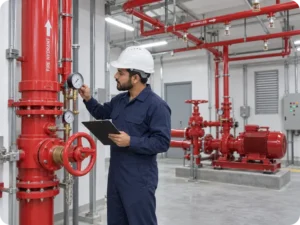
In a fire pipe network, dependable results come from treating pipework as part of a complete engineered route rather than as an isolated item. The pipe must be coordinated with valves, fittings, supports, equipment interfaces and access points. Compatibility should be confirmed against drawings, hydraulic requirements, site conditions and the authority having jurisdiction before procurement or installation.
Key Features and System Role
- Provides a continuous metallic pathway for configured fire water service between network components.
- Supports straight routing sections that can be integrated with project-matched elbows, tees, reducers and joints.
- Allows connection details to be defined for the actual installation instead of assuming one thread, flange or coupling system.
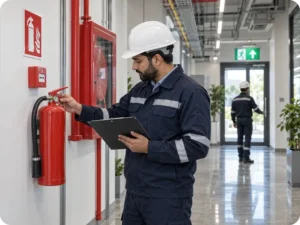
- Creates accessible pipe runs that can be visually checked as part of routine fire protection system inspection.
Typical Applications
Typical uses include hose reel distribution lines, fire water branches, service-room pipework and connections between compatible valves or fire protection equipment. The final use depends on the approved design, the required pipe route and the connection method specified by the responsible project team.
Specification and Project Coordination
Confirm the required pipe size, usable length, grade, finish, connection type, joining procedure and support arrangement from approved documents. The term GI Pipe identifies the galvanized steel pipe family only; it does not by itself establish a coating process, coating mass, pressure capability, dimensional standard or compliance status.
Installation, Inspection and Maintenance
Installation should be completed by competent personnel using compatible fittings, joints and supports. Before service, inspect alignment, joint completion, support condition and route accessibility, then carry out the project-required testing. During maintenance, watch for physical damage, joint leakage, disturbed supports or changes that could obstruct inspection.
Explore Fire Pipe Network Solutions
For supply support and project coordination, contact AJ Safety Solutions. Review the complete Fire Pipe Network product range and coordinate this item with compatible fire valves where required by the approved system design.
Reference Standards
Project teams may consult NFPA 14 for the applicable standpipe and hose system framework and NFPA 25 for inspection, testing and maintenance context. The project specification and authority having jurisdiction determine the applicable requirements.
Reviews
There are no reviews yet.