
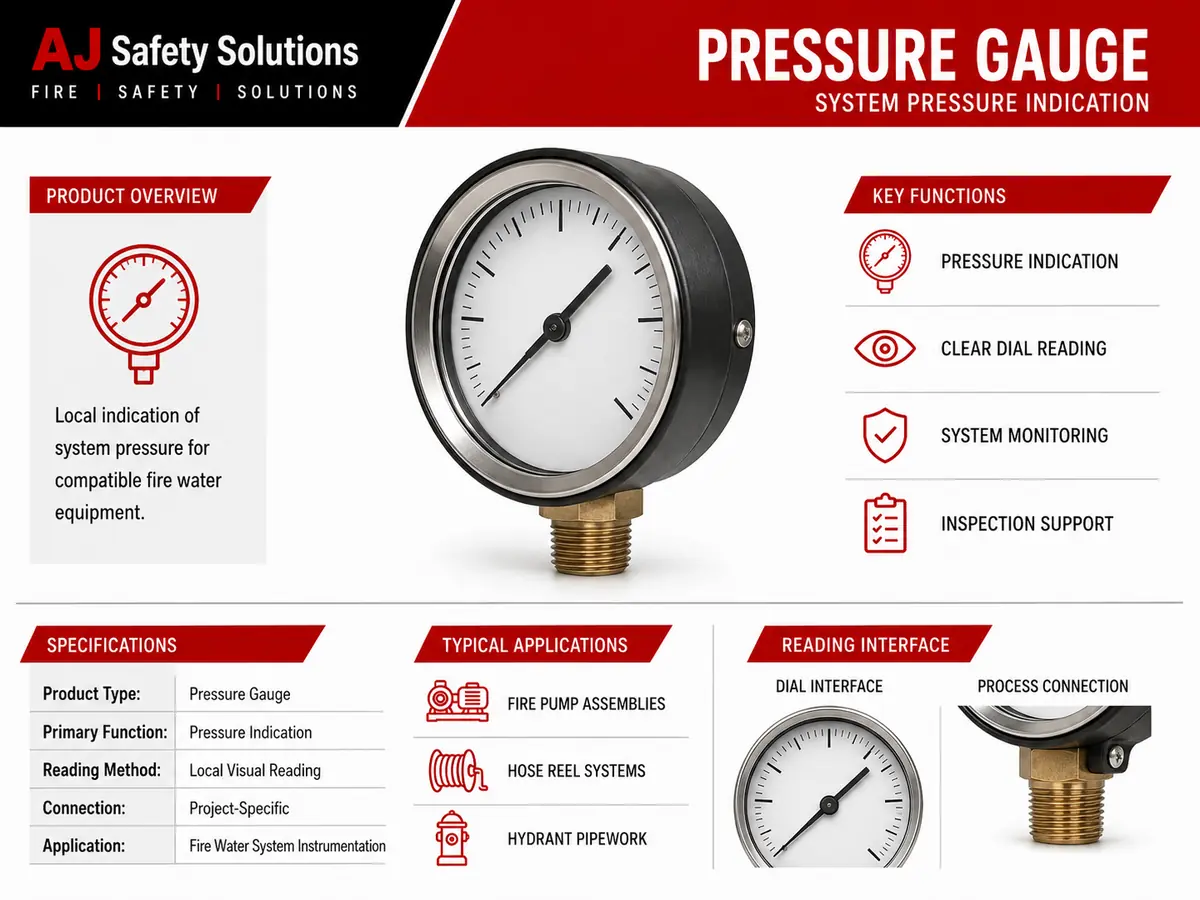
Pressure Gauge for Fire Water System Indication
A pressure gauge provides a local visual indication of pressure at a selected point in compatible fire water equipment. The instrument converts pressure applied through its process connection into a readable dial position or other model-specific display. It helps operators and maintenance personnel observe system condition without implying that the gauge itself controls pressure or starts equipment.
Coordinate the required instrument with AJ Safety Solutions, review the available gauges and instruments, and plan inspection access through the related hose reel testing and maintenance information.
Local Pressure Reading
A typical local gauge includes a protective case, viewing face, pointer mechanism and process connection. The installed orientation should keep the display visible while protecting the instrument from avoidable impact, vibration, heat and contamination. The actual sensing element, case material, window, dial units and connection arrangement depend on the selected model.
Functional Features
- Provides an immediate local indication at the measurement point.
- Supports comparison of observed condition with approved operating information.
- Visible pointer and scale assist routine inspection and maintenance records.
- Compact instrument form can be coordinated with compatible pipework and equipment.
Typical Applications
Pressure gauges may be coordinated with fire pump assemblies, hose reel pipework, hydrant systems, test lines, valve stations and other approved fire water arrangements. Final location and quantity should follow the project design, equipment documentation and instructions from the responsible system designer.
Specification and Installation Notes
Pressure range, dial diameter, unit scale, accuracy class, connection thread, mounting position, case material, environmental rating, liquid filling, isolation accessory, certification and approval are model-specific. None of those values is assumed in this generic record. Confirm compatibility, readable range and installation requirements before ordering or publishing the product.
Inspection and Standards Context
Keep the face legible, look for physical damage or leakage, and compare readings only under known operating conditions. System teams can consult NFPA 14 for relevant standpipe and hose system requirements and NFPA 25 for inspection, testing and maintenance guidance. Adopted codes, approved drawings, manufacturer instructions and the authority having jurisdiction remain controlling.



Reviews
There are no reviews yet.