

Cabinet Lock for Fire Hose Reel Cabinet Access
A Cabinet Lock provides the closure interface between a compatible fire equipment cabinet door and its frame. Depending on the selected model, it may use a project-specific key, latch, handle or release arrangement. The lock must support the approved access strategy without obstructing the emergency use, inspection or maintenance requirements of the complete cabinet.
Coordinate the accessory through AJ Safety Solutions, review the complete hose reel accessories category, and compare the related fire cabinet range before finalising the assembly.
Cabinet Closure and Access Interface
The lock body is fitted to the door or frame so its latch engages the matching keeper or edge detail. Correct alignment allows the door to close and release as intended. The actual operating method, keying, emergency access and retention force depend on the supplied lock and cabinet design; no universal key or release method is assumed.
Key Product Considerations
- Provides a defined closure point for a compatible fire cabinet door.
- Coordinates access control with the approved cabinet arrangement.
- Visible lock and latch surfaces support inspection and service access.
- Project-specific interface allows matching with the actual door and frame.
Typical Applications
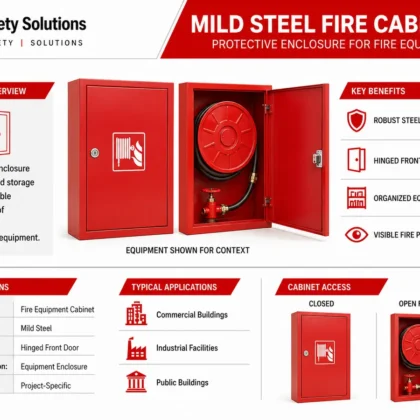
Cabinet locks may be installed on hose reel cabinets, combined fire equipment enclosures and verified replacement doors. Selection should consider door thickness, frame geometry, access procedures and the need for authorised maintenance while preserving the fire point’s intended availability.
Specification and Ordering Notes
Confirm lock type, operation, key or tool requirement, latch geometry, cut-out, door thickness range, body material, finish, keeper arrangement, handedness, approval and included keys or fixings. No security rating, lock standard, dimension, material grade, universal key, certification or supplied accessory is asserted.
Inspection and Standards Context
Inspect operation, latch engagement, door alignment, looseness, wear, corrosion and damage. Confirm that authorised access remains available and that no unauthorised alteration prevents the cabinet from opening as required. Project teams may consult NFPA 14 for relevant standpipe and hose system requirements and NFPA 25 for inspection, testing and maintenance guidance. Adopted codes, approved drawings, manufacturer instructions and the authority having jurisdiction remain controlling.




Reviews
There are no reviews yet.