
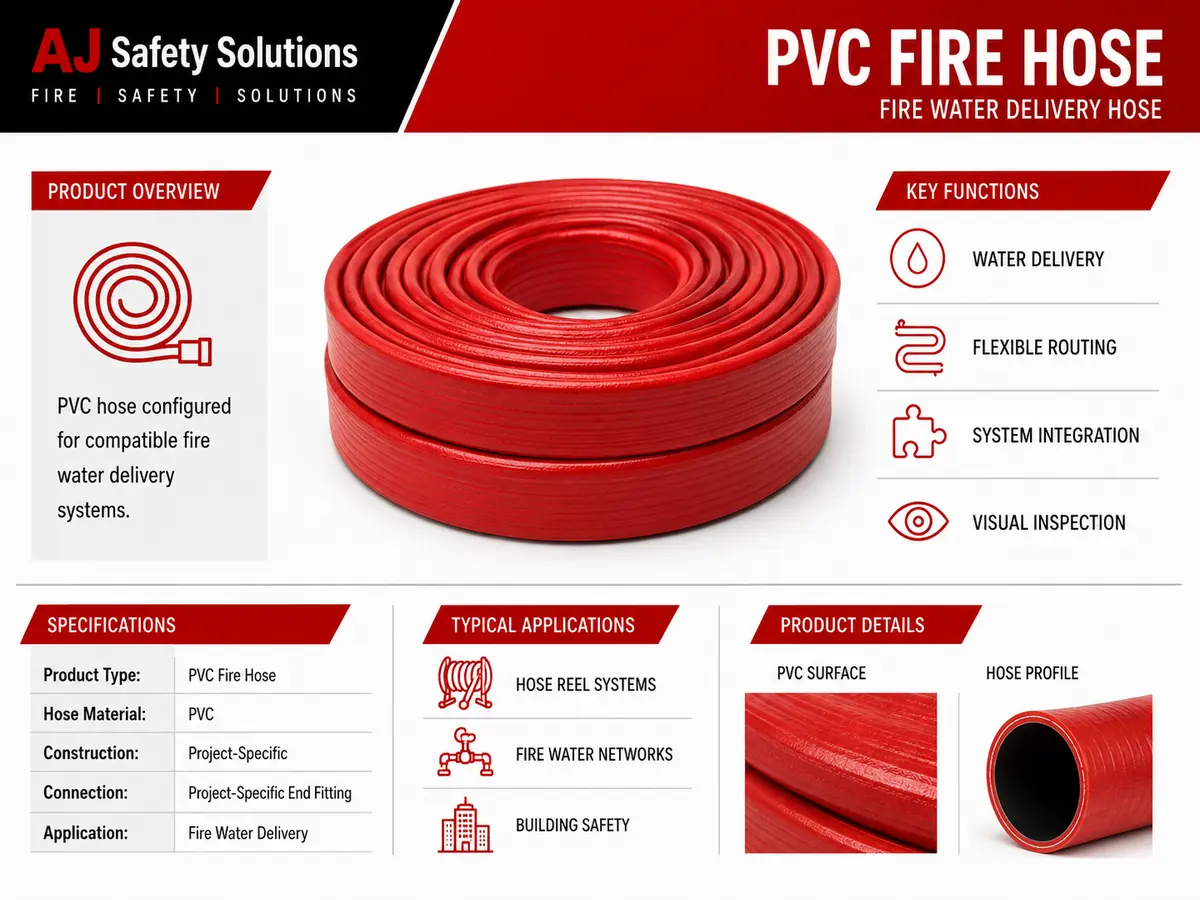
PVC Fire Hose for Compatible Fire Water Delivery
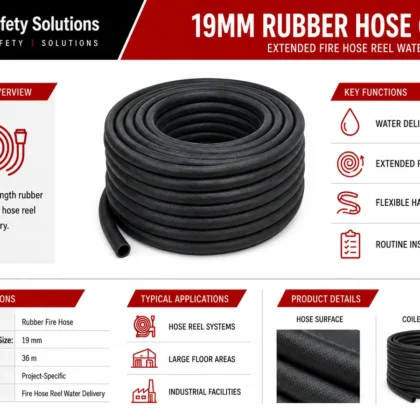
PVC Fire Hose uses PVC as the identified hose material and provides a flexible passage for water within a compatible fire protection arrangement. The selected hose must match the system layout, connection interfaces and intended handling method. PVC identifies the product family, but it does not establish a particular layer construction, reinforcement, pressure capability or environmental rating.
Request project support from AJ Safety Solutions, browse the available fire hose range, and coordinate the hose with compatible hose reel equipment shown in the approved design.
Material and System Integration
The hose body creates the continuous water path between connected components. Depending on the actual model, its wall may use a project-specific combination of PVC layers, reinforcement and surface finish. The hose should route without damaging bends or contact with sharp edges, and its ends should be prepared only for the verified connection method and approved fittings.
Functional Considerations
- PVC is the identified hose material for this generic product record.
- Flexible form supports routing within a compatible fire water assembly.
- Project-specific end fitting allows coordination with the selected equipment.
- Accessible hose surface supports visual inspection and service planning.
Typical Applications
PVC fire hose may be considered for hose reel systems, cabinet arrangements, building fire points, service areas and other approved water-delivery installations where the selected model meets the design criteria. Indoor, outdoor, chemical, temperature and exposure conditions should be reviewed against verified manufacturer documentation rather than inferred from the PVC name alone.
Specification and Ordering Notes
Confirm nominal size, overall length, internal and external diameter, wall construction, reinforcement, working and test pressure, bend radius, temperature range, colour, connection, coupling compatibility, marking, approval and included accessories. No fixed dimension, pressure, flow, durability claim, certification or supplied fitting is asserted in this description.
Inspection and Standards Context
Routine checks should cover the hose surface, ends, winding or storage condition, routing and connection areas for visible damage, leakage, flattening or obstruction. Consult NFPA 14 for relevant standpipe and hose system requirements and NFPA 25 for inspection, testing and maintenance guidance. Approved drawings, manufacturer instructions, adopted codes and the authority having jurisdiction control final use.




Reviews
There are no reviews yet.