
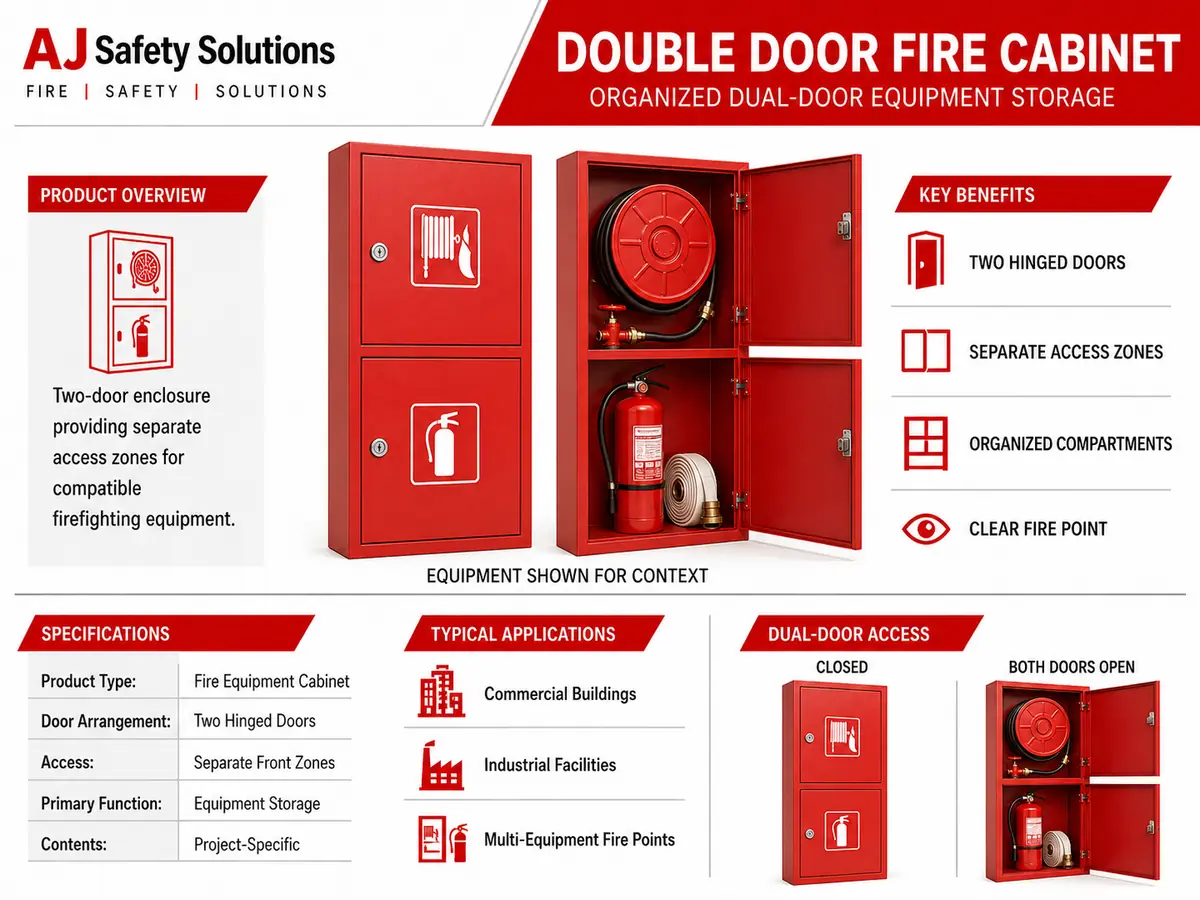
Double Door Fire Cabinet with Separate Access Zones
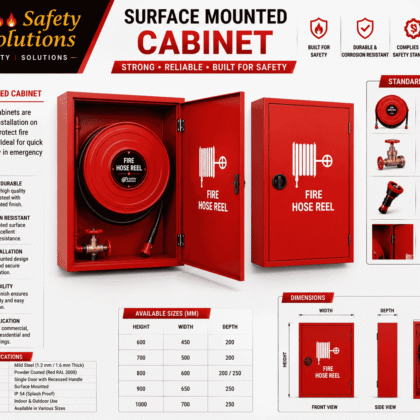
A double door fire cabinet provides two distinct front openings for an organized firefighting equipment layout. The doors may serve separate compartments or access areas, helping users reach the required section without opening the complete cabinet arrangement.
Plan the fire point with AJ Safety Solutions, compare available products in the fire cabinet category, and coordinate the enclosure with suitable hose reel equipment.
Dual-Door Cabinet Arrangement
The two hinged doors create independent access zones across the front of the enclosure. A project may use the available space for a hose reel, fire hose, nozzle, valve, extinguisher, or another approved combination. The actual contents, compartment division, and mounting brackets must follow the cabinet schedule and approved drawings.
Key Functional Features
- Two hinged doors provide separate front access areas.
- Compartmented space supports an organized equipment arrangement.
- The tall cabinet format can consolidate multiple compatible items at one fire point.
- Clear door identification can help users recognize the stored equipment.
Typical Applications
Double door fire cabinets may be used in commercial complexes, industrial plants, warehouses, hospitals, hotels, schools, residential towers, and other multi-equipment fire points. Mounting can be surface, recessed, semi-recessed, or otherwise configured where the selected model and supporting structure permit it.
Project Specification Notes
Cabinet material, overall size, sheet thickness, door orientation, compartment arrangement, finish, viewing panels, locking method, mounting type, equipment capacity, and required approvals vary by model. This description does not assign unverified values. The infographic shows representative equipment only and does not define what is included with the cabinet.
Standards and Maintenance References
Refer to NFPA 14 for applicable standpipe and hose system requirements and NFPA 25 for inspection, testing, and maintenance guidance. Final compliance depends on the locally adopted code, approved design, manufacturer documentation, and authority having jurisdiction.






Reviews
There are no reviews yet.