Flanges for Fire Pipe Networks
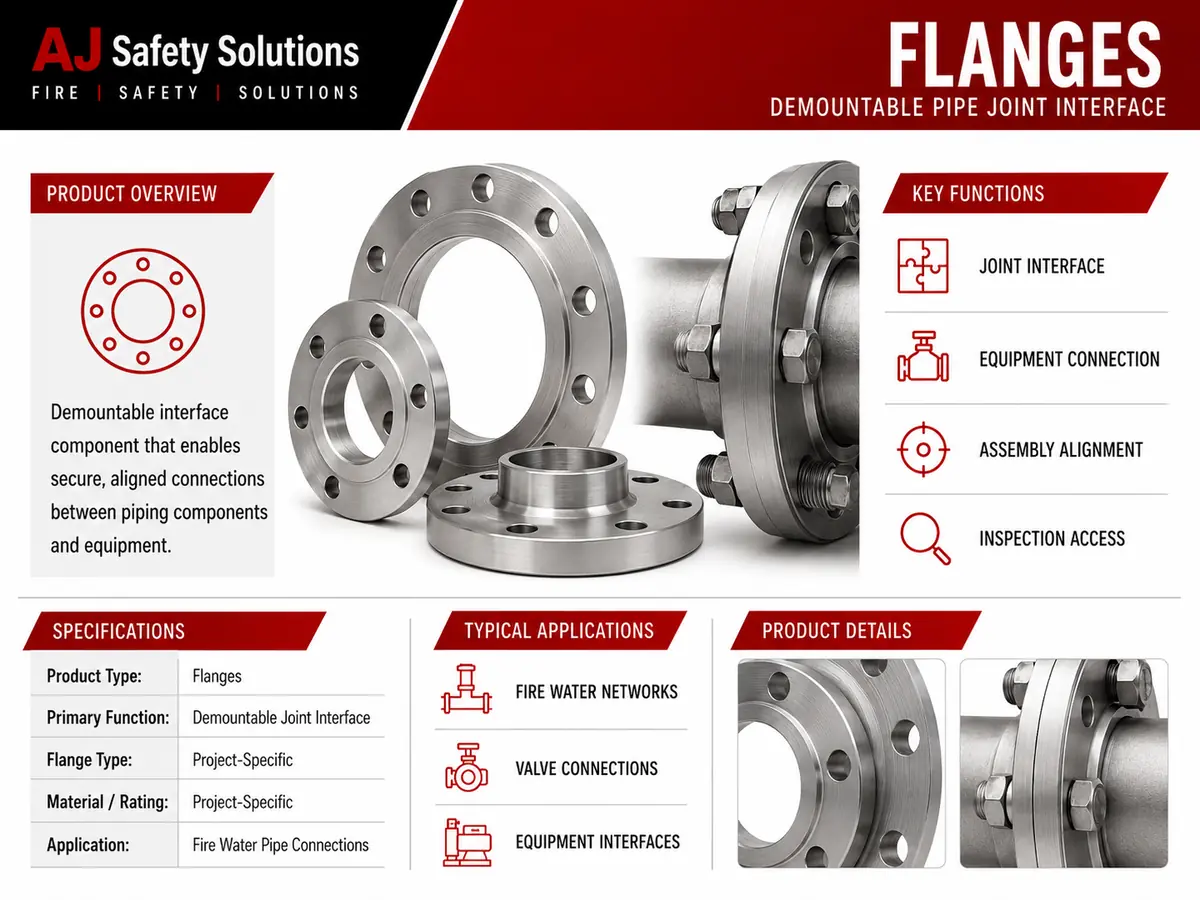
Flanges form a demountable interface between compatible sections of fire water pipework, valves or equipment. They allow a documented connection point to be assembled and later accessed when the approved system design uses a flanged joint.
Flanges vary widely in type, facing, dimensions, drilling, material and rating. A general product name or visual example cannot establish compatibility. Both mating sides, the sealing element and the fastening arrangement must belong to the same approved joint specification, with suitability confirmed for the intended service.
Key Features and System Role
- Creates a defined demountable interface within a configured fire water piping assembly.
- Supports connection of compatible pipes, valves and equipment where flanged joints are specified.
- Provides an accessible joint area for alignment, fastening and sealing checks.
- Allows project documentation to define the exact flange type and matching connection components.
Typical Applications
Typical flanged locations can include valve assemblies, pump or equipment interfaces, sectional connections and other points identified in fire water drawings. The application should be determined by the design, not by assuming that any two similar-looking flanges will mate correctly or provide the required service performance.
Specification and Project Coordination
Confirm nominal size, flange type, facing, drilling pattern, material, documented rating, dimensional standard, sealing element and fastening requirements. Verify the mating component has matching details. The package intentionally does not state a flange class, bolt pattern, gasket type or certification because these must come from project and supplier documentation.
Installation, Inspection and Maintenance
Protect joint faces before assembly and inspect them for damage or contamination. Align mating flanges without forcing the pipework, use the approved sealing and fastening arrangement, and complete required checks and testing. Maintenance should include examination for leakage, corrosion or damage, loose components and any loss of access around the joint.
Explore Fire Pipe Network Solutions
For supply support and project coordination, contact AJ Safety Solutions. Review the complete Fire Pipe Network product range and coordinate this item with compatible fire valves where required by the approved system design.
Reference Standards
Project teams may consult NFPA 14 for the applicable standpipe and hose system framework and NFPA 25 for inspection, testing and maintenance context. The project specification and authority having jurisdiction determine the applicable requirements.


Reviews
There are no reviews yet.