
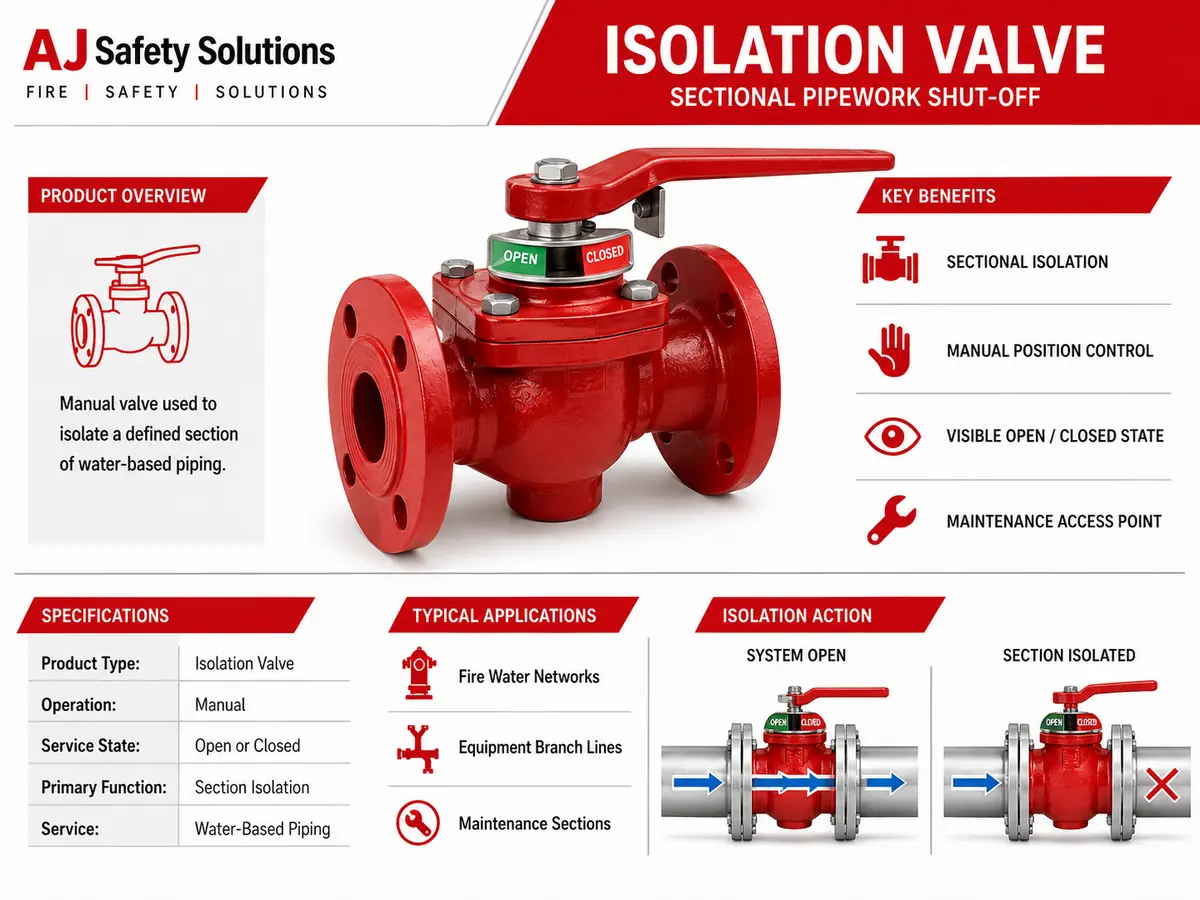
Isolation Valve for Sectional Fire-Water Control
An isolation valve creates a controlled boundary within a piping network. When open, it allows the designed water path to remain available; when closed, it separates the downstream section for an approved operational or maintenance purpose.
Plan a coordinated installation with AJ Safety Solutions, review the wider fire valve category, and match the valve with compatible fire pipe network components.
Sectional Shut-Off Function
The valve is placed at a defined system boundary, equipment branch, zone, or service point. Its manual mechanism moves the internal closure between open and closed positions. A visible position indicator or clear handle orientation can support inspection, although the exact indication method depends on the selected valve design.
Key Functional Features
- Separates a defined section of a compatible piping network.
- Manual operation provides a deliberate change of service state.
- Open and closed positions support clear operational control.
- Strategic placement can provide access around equipment or maintenance sections.
Typical Applications
Isolation valves may be placed at riser branches, pump or tank connections, equipment zones, floor sections, and other locations identified by the approved design. The term describes a system function rather than one single body style; ball, butterfly, gate, and other valve types may perform isolation duties when properly specified.
Project Specification Notes
The required valve type, connection, size, body and trim materials, supervisory arrangement, pressure rating, and approvals depend on the application. This generic listing does not assign those values. Selection should follow the hydraulic design, valve schedule, access requirements, and manufacturer documentation.
Standards and Maintenance References
Refer to NFPA 14 for relevant standpipe and hose system requirements and NFPA 25 for inspection, testing, and maintenance guidance. Final requirements are determined by the adopted code and authority having jurisdiction.











Reviews
There are no reviews yet.